Quick answer: an APAAR ID is a lifelong academic ID for each student under India's "One Nation, One Student ID" initiative. Schools generate it through the UDISE+ system with parental consent, after the student's details match their Aadhaar. CBSE has tied APAAR IDs to board registrations, so schools should collect consent, fix name and date-of-birth mismatches and track pending students well before registration opens.
Last updated: November 2026. Rules change; always follow the latest circulars from CBSE, your state board and the Ministry of Education.
What is APAAR ID?
APAAR stands for Automated Permanent Academic Account Registry. It is a unique ID for each student that links academic records, such as marks, certificates and credits, across schools and years. It connects with DigiLocker and the Academic Bank of Credits, so a student's records can follow them when they change schools or move on to higher education. More details are on the official APAAR portal.
Why APAAR matters for schools now
CBSE has linked APAAR IDs to its registration process. It relaxed the requirement for the 2026 board exams after schools reported consent and data problems (Careers360), and has said APAAR IDs are needed for Class 9 and 11 registrations from the 2026–27 session (Careers360). State boards and other exams are also starting to ask for it.
How APAAR IDs are generated
- The student's record exists in UDISE+ with a Permanent Education Number (PEN).
- The school collects consent from the parent or guardian.
- The student's name, date of birth and gender are checked against their Aadhaar.
- The school generates the APAAR ID through the UDISE+ system.
- The ID is shared with the parent and recorded in the school's records.
The common problems
Missing consent
APAAR needs the parent's consent. Some parents haven't been asked, others have questions about how the data is used. A short, clear explanation and consent form at the start of the year helps.
Name and date-of-birth mismatches
A single spelling difference between school records and Aadhaar can block generation. Typical causes are initials, spelling variants and dates entered in the wrong format.
Missing Aadhaar
Some students don't have Aadhaar, or it isn't updated. These cases need early attention and follow-up with families.
No tracking
Schools often don't know how many students still need an ID until registration opens.
A step-by-step plan for schools
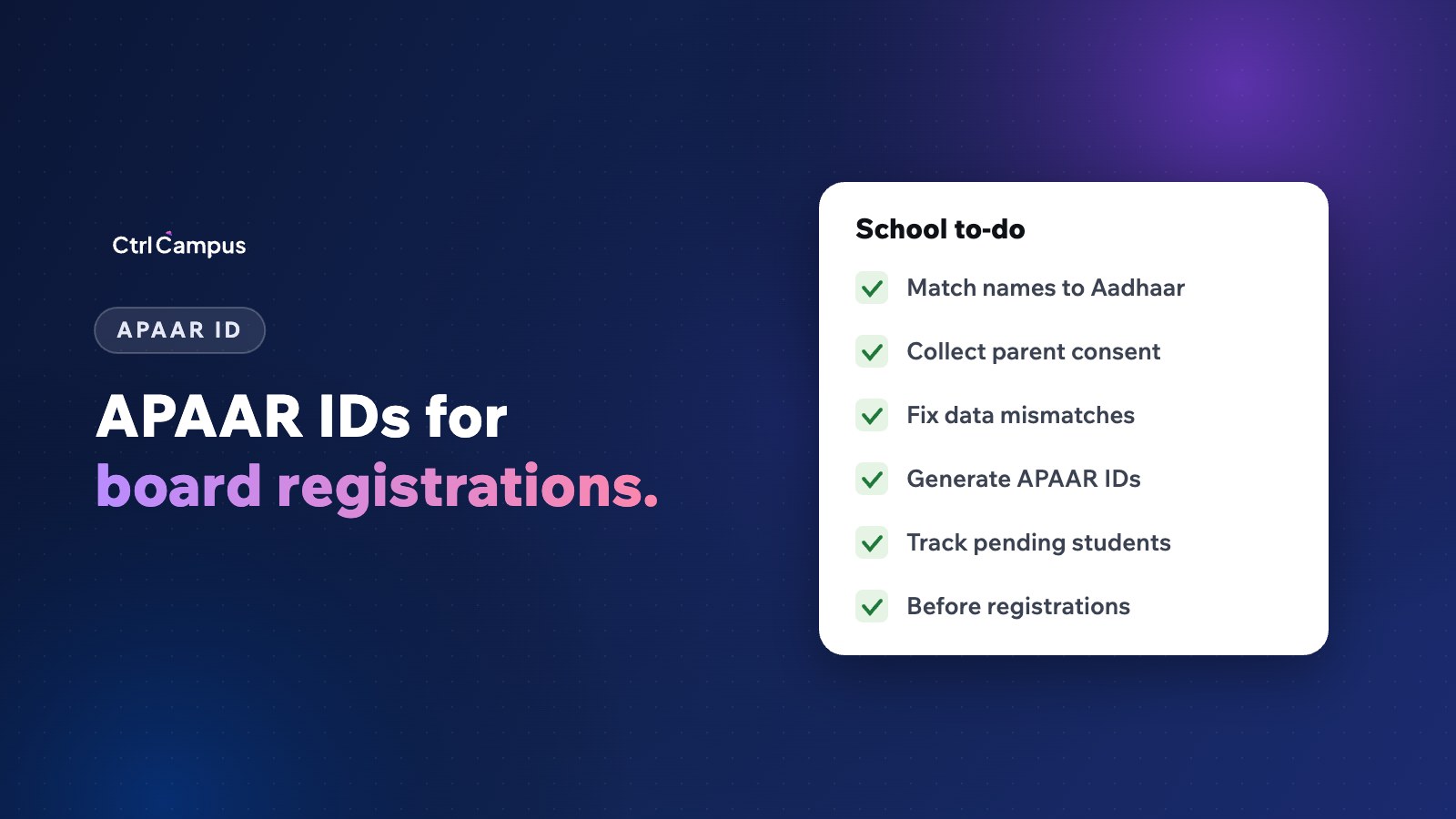
- Pull a list of students in the classes that need APAAR this year.
- Collect consent forms from parents, with a short explanation.
- Compare school records with Aadhaar details and list mismatches.
- Ask parents to confirm the correct details or update documents.
- Generate IDs in batches and record each one against the student.
- Track pending students by class and reason, and follow up weekly.
- Finish well before your board's registration window.
Data protection
APAAR involves Aadhaar-linked personal data of children. Collect only what is needed, record consent and keep access limited to the staff handling it. Our DPDP Act guide for schools explains the duties that apply from May 2027.
How CtrlCampus helps
In CtrlCampus, every student's details sit on one record in the ERP, which makes it easier to find mismatches, record consent and track which students still need an ID. Parents can be reminded on WhatsApp from the school's verified number. See our guide to UDISE+ data and the Oaktree Kidz case study.
FAQ: APAAR ID
What is an APAAR ID?
A unique, lifelong academic ID for each student, under the Automated Permanent Academic Account Registry.
Who generates the APAAR ID?
The school, through the UDISE+ system, after parental consent and a match with Aadhaar details.
Is APAAR mandatory for CBSE registrations?
CBSE has said APAAR IDs are needed for Class 9 and 11 registrations from the 2026–27 session. Check the latest CBSE circular for your classes.
What if a student's name doesn't match Aadhaar?
Confirm the correct details with the parent and update either the school record or Aadhaar before generating the ID.
What if a parent doesn't consent?
Explain the purpose and follow your board's latest guidance for such cases. Book a demo to see student records in CtrlCampus.