Quick answer: under Section 12(1)(c) of the RTE Act, private unaided schools reserve at least 25% of entry-level seats for children from weaker sections and disadvantaged groups, and the state pays RTE reimbursement for them. Claims go smoothly when the school keeps clean records of each RTE student, the fees waived, attendance and every claim submitted.
Last updated: November 2026. This guide is general information; follow your state's current RTE rules and portal instructions.
The Right of Children to Free and Compulsory Education Act, 2009 (the RTE Act) requires most private unaided schools to admit children from weaker sections and disadvantaged groups in their neighbourhood. For school offices, the hard part is usually not the admission but the paperwork that follows, year after year, until the child completes elementary education.
What Section 12(1)(c) requires
- Private unaided schools (with some exceptions, such as minority institutions) admit children from weaker sections and disadvantaged groups to at least 25% of the strength of the entry-level class.
- Those children receive free and compulsory elementary education until they complete it.
- Admissions in many states happen through a state portal and lottery, rather than directly by the school.
The definitions of weaker sections and disadvantaged groups, income limits, neighbourhood rules and the admission process are set by each state.
How RTE reimbursement works
Section 12(2) of the Act says the state reimburses the school for these children, to the extent of the per-child expenditure incurred by the state, or the actual amount charged from the child, whichever is less. States notify the per-child amount and the claim process, which often runs through an online portal with yearly claims.
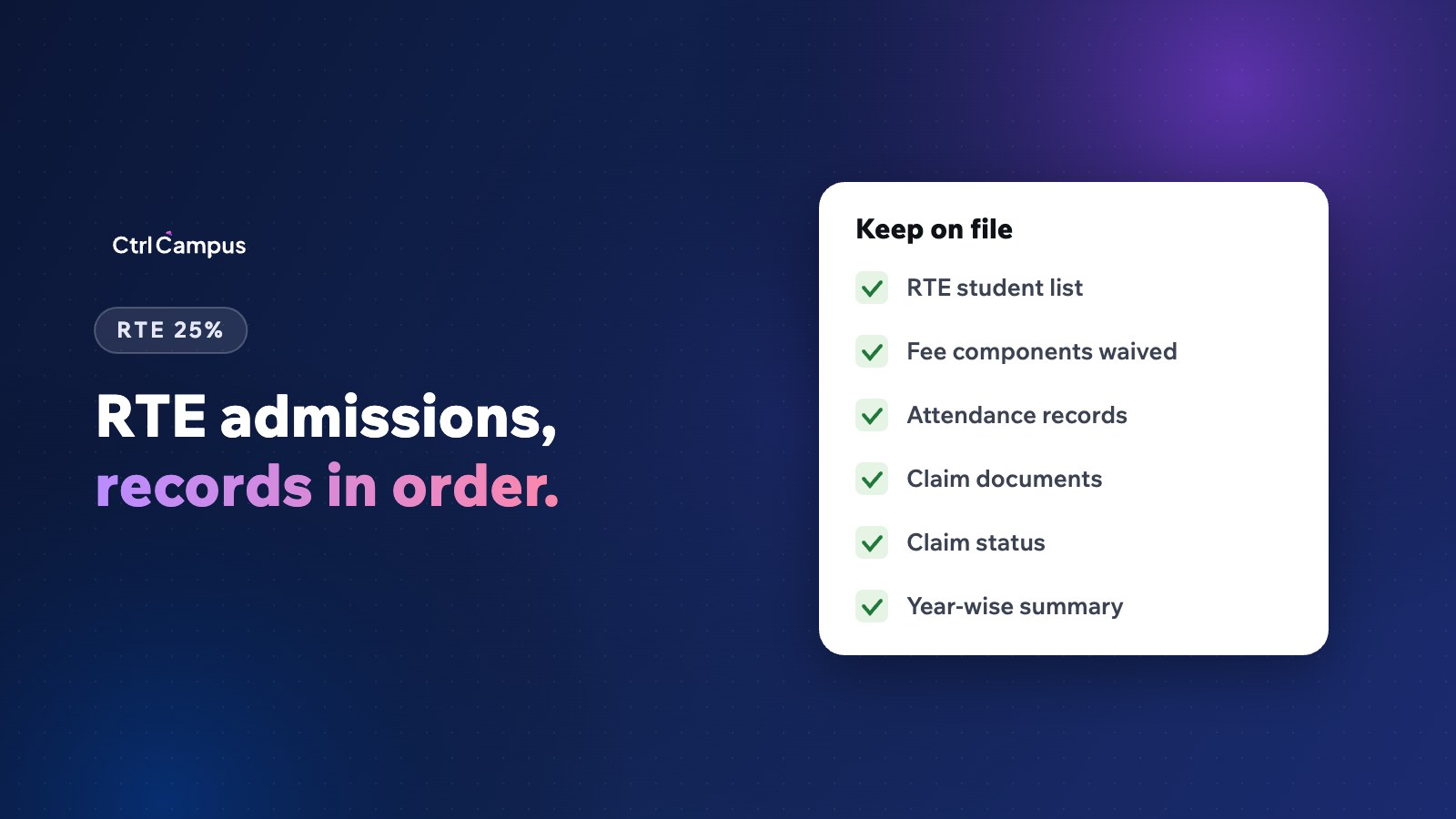
Records schools should keep for each RTE student
- Admission details: the allotment from the state portal or authority, date of admission, class and section.
- Eligibility documents as required by your state.
- Fee heads waived each year, recorded so they don't appear as dues.
- Attendance, since some states ask for it with claims.
- Promotion from class to class.
- Each reimbursement claim: year, amount claimed, documents submitted, status and amount received.
Common pitfalls
- RTE students appearing in the defaulters list because waived fees were never set up as concessions.
- Claims missing documents, leading to delays or rejections.
- Records spread across a register, an Excel sheet and the accounts software.
- Losing track of claims across years when staff change.
- No summary for management showing claimed versus received amounts.
Setting it up in your school software
- Mark each RTE student with a category in their record.
- Set up a concession that waives the applicable fee heads, so they never show as dues.
- Keep their documents attached to the student record.
- Generate class-wise lists of RTE students for claims.
- Track each claim's amount and status by year.
This keeps RTE students' parents from receiving fee reminders by mistake, and gives the accounts office everything needed for claims in one place.
How CtrlCampus helps
In the CtrlCampus ERP, concessions are set per student, so fee heads waived for RTE students don't show as dues or trigger reminders. Documents, attendance and marks sit on the same student record, and class-wise reports export to Excel for claims. Read our guides to the school fee structure format and UDISE+ data, and the Oaktree Kidz case study.
FAQ: RTE reimbursement
What percentage of seats is reserved under RTE?
At least 25% of the strength of the entry-level class in private unaided schools covered by Section 12(1)(c).
How much is the RTE reimbursement?
The per-child expenditure notified by the state or the actual fee charged, whichever is less. Check your state's current notification.
How do schools claim RTE reimbursement?
Through the process your state notifies, often an online portal with yearly claims and supporting documents.
Do RTE students pay any fees?
They receive free elementary education under the Act. Check your state's rules on items such as uniforms and books.
How long does the RTE benefit last?
Until the child completes elementary education. Book a demo to see RTE concessions and reports in CtrlCampus.